Team building: what it is, why it matters and which formats exist
Team building isn’t “games for grown-ups” but a tool that helps people work together better. Here are the formats, how to choose yours and what makes team building useful rather than a formality.
About this article
Everyone has heard the term “team building”, but people understand it differently: for some it is an outdoor quest, for others a strategy session, for others a corporate party with games. In this article we explain what team building really is, what problems it solves, break down 12 popular formats and share how we prepare team events so that people actually work better together afterwards.
What team building is in simple words
Team building is an event or a series of activities whose goal is to help people in a team know each other better, trust each other and act together smoothly. The form can be anything: a game, a quest, a competition, a creative workshop, a trip into nature. What matters is not the format but the result: after team building, colleagues should communicate more easily than before.
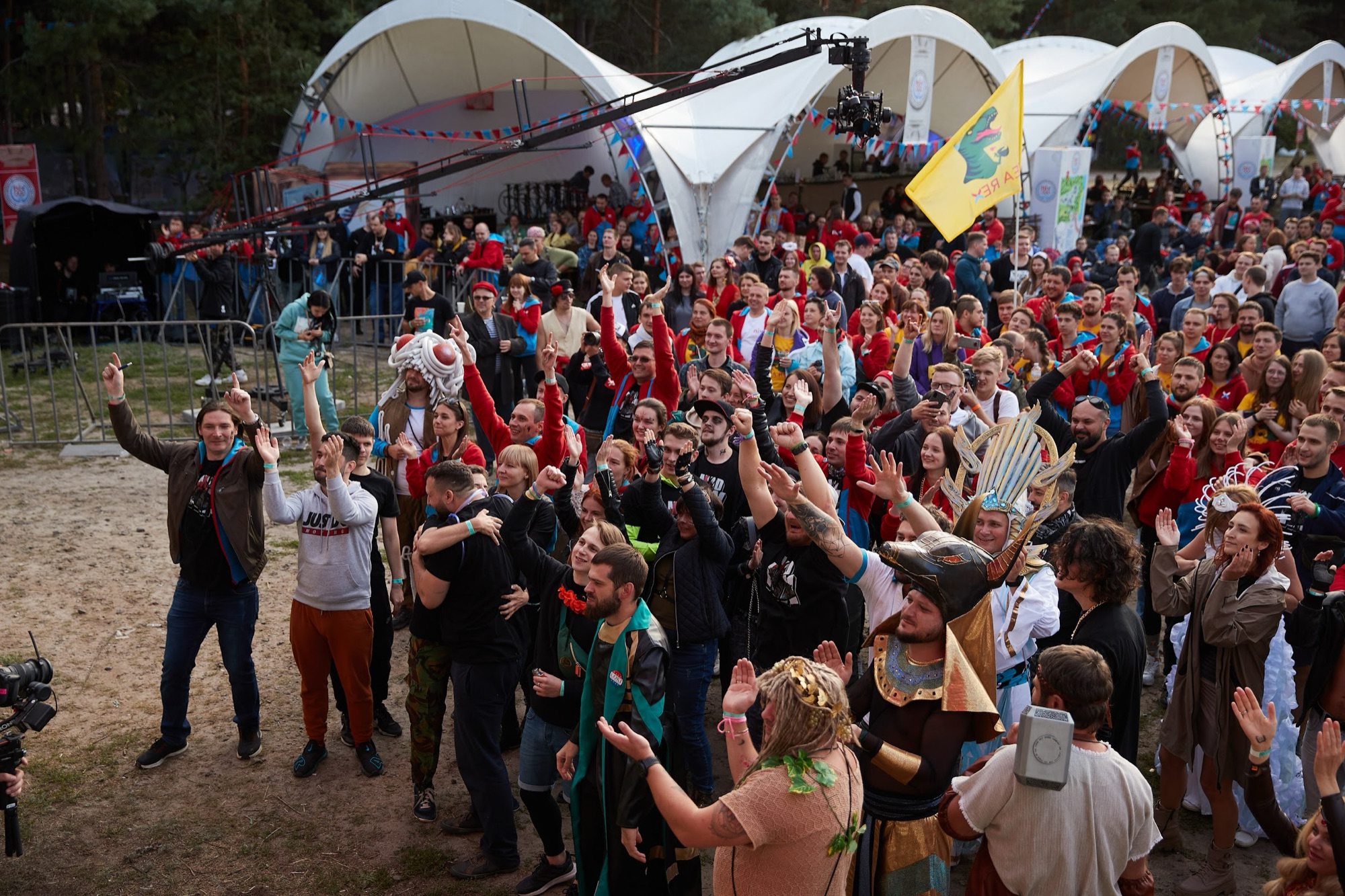
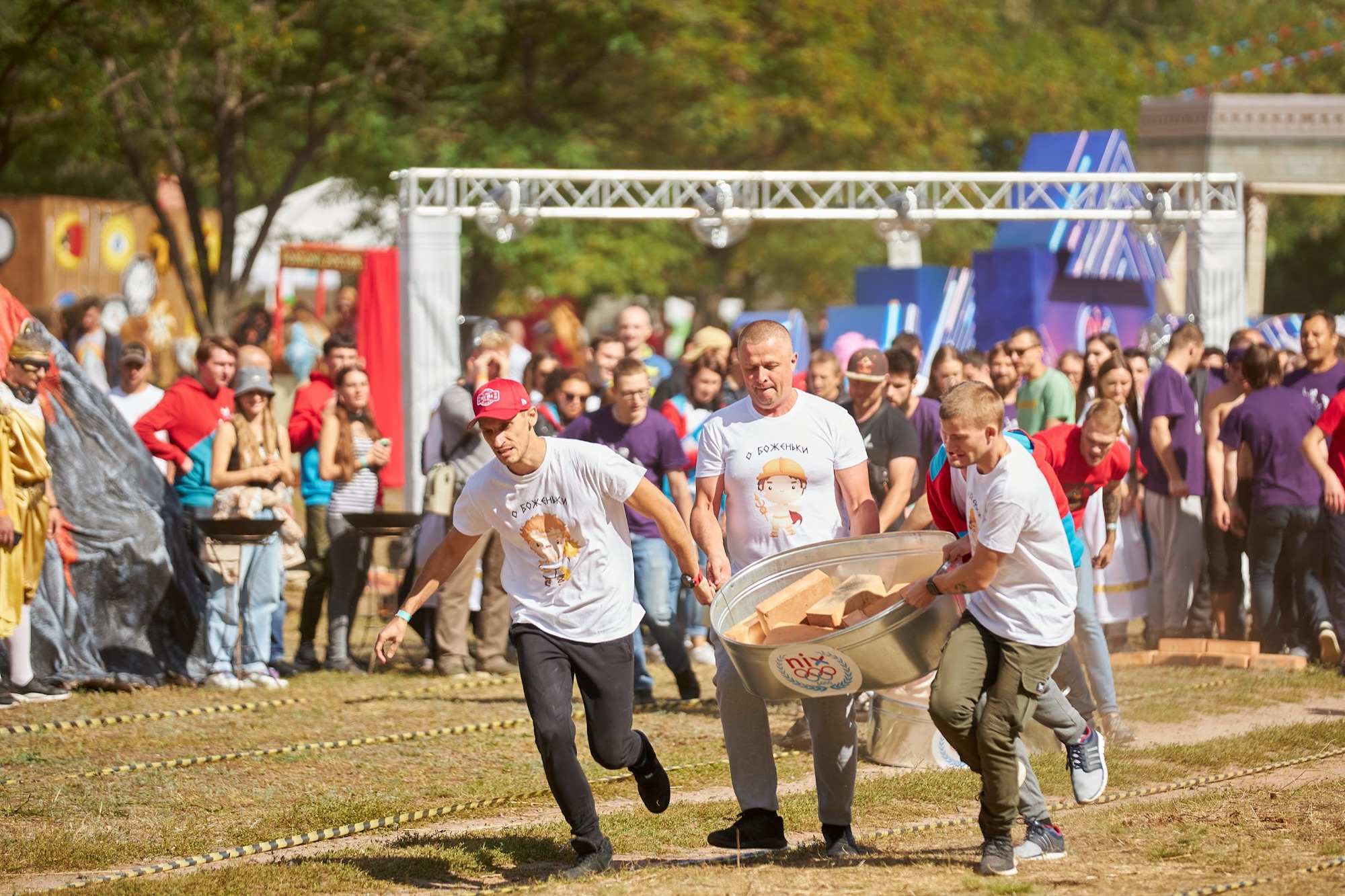
Team building differs from a corporate party in its goal. A corporate party is first of all a celebration and a thank-you to people. Team building is work on the team, even if in the form of a game. The two are often combined: during the day the team does a quest or competition, and in the evening it celebrates together. That is exactly how we built the Olympic Games for 1,800 NIX employees: daytime team competitions and a big evening show.
Why companies need team building
01Getting to know
new people become part of the team faster
02Trust
colleagues see each other in action
03Interaction
departments learn to work together
04Energy
the team rests and recharges
What problems team building solves
Before choosing a format, answer honestly: why does the company need this event right now? Everything depends on the answer, from the programme to the duration. Here are the most common requests companies come to us with.
The team has grown, and new employees don’t yet feel they belong.
Departments work side by side but barely interact, which slows projects down.
People work remotely in different cities and only see each other in messengers.
A difficult period is behind them, and the team needs a reset.
The company is launching a new strategy and wants people to feel part of it.
They simply want to thank the team and give people a chance to relax together.
If the goal is getting to know each other, formats with frequent team reshuffles work. If it is cooperation between departments, tasks that can’t be won without sharing information. If it is rest, light and fun activities without tough competition. We always choose the format for the goal, not the other way round.
12 team-building formats
A quest. Teams follow a route with tasks and riddles, and the final is decided by a joint answer. A quest can be in the city, in nature, indoors or using QR codes and smartphones. Works well for getting acquainted and for interaction between departments.
A quiz. An intellectual team game with questions on different topics. Suits any age, needs no physical fitness and is easy to run in the office or online. More in our article about quizzes.
Sports competitions. Relays, team games, corporate Olympics. An energetic format for large teams where the sense of a shared victory matters.
Culinary team building. Teams cook under a chef’s guidance and compete for the best presentation. One of the favourite activities for those who don’t like running around.
Creative workshops. Painting, floristry, ceramics, creating a team art object. A calm format whose result people take home as a keepsake.
A business game or simulation. Teams run a mock company, make decisions and see the consequences. Works well for managers and departments that need to learn to agree.
Rope parks and outdoor activities. Adventures that can’t be done without the team’s support. Best in the warm season and on off-site events.
Rafting, hiking, jeep tours. For active teams on corporate retreats in the mountains. We write about such trips in our article on a corporate retreat in Bukovel.
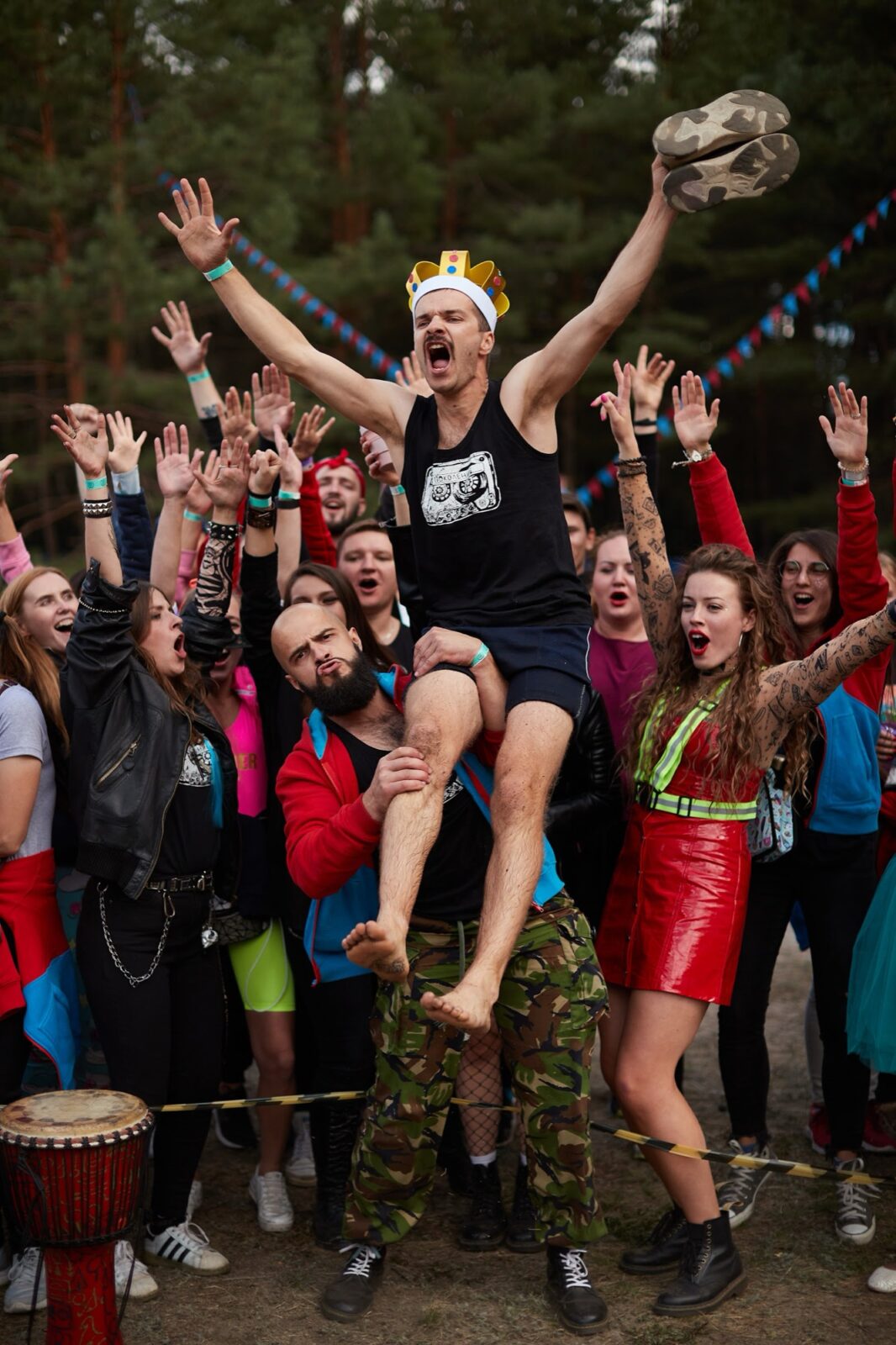
Drum team building. A large group learns to play a shared rhythm. Spectacular, quick and unites even hundreds of people within an hour.
Charity team building. The team does something useful together: assembling kits, improving a space, organising a fundraiser. A valuable format because the result is seen not only by the team.
An immersive themed game. Teams step into the plot of a film or series with costumes, sets and actors. The most emotional format for corporate events.
Online team building. Quizzes, quests and creative tasks for teams working remotely. More in our article on online corporate events.
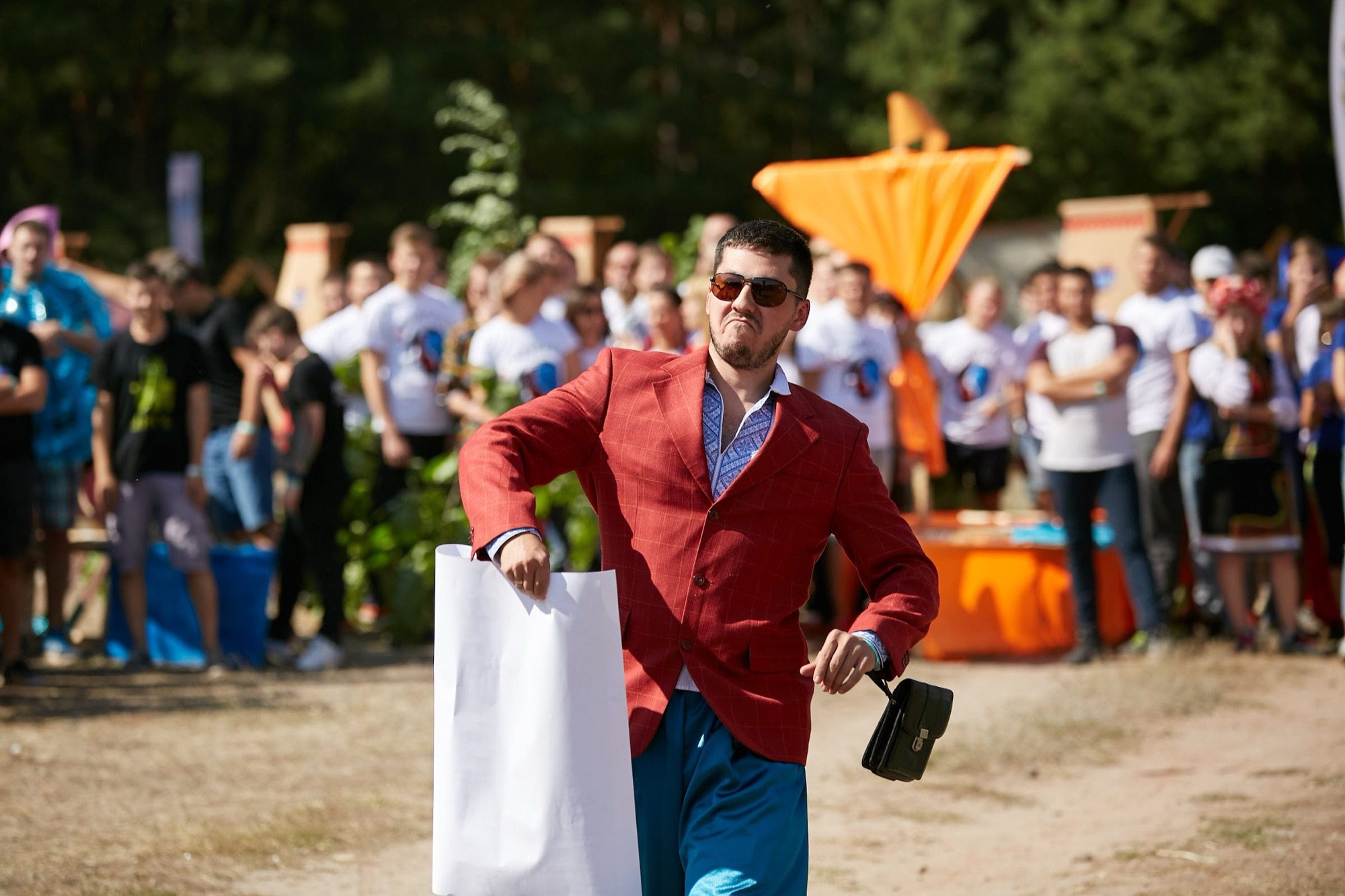
Our team building for NIX: the “Olympic Games” and the Cossack-themed September party
How to choose a format for your team
The best team building is the one people want to take part in. So before choosing we always ask about the team: how many people, their age and fitness, whether everyone knows each other, how much time there is and what the team has already tried.
Number of participants: quests and quizzes scale easily, a cooking class doesn’t.
Team composition: if some people don’t like activity, you need parallel formats.
Season and place: nature in summer, indoors or the mountains in winter.
Duration: a short two-to-three-hour format or a whole day.
Goal: getting acquainted, interaction, a reset or a celebration.
We often combine active challenges with games of logic and wit. That way everyone finds a way to shine, and nobody stands on the sidelines.
How to run team building so it works
Team building can be fun but useless if it isn’t connected to the team’s real work. Here is what makes it effective.
A clear goal known to the organiser and, ideally, to participants.
Mixed teams so that people from different departments work together.
A host who involves everyone and watches the atmosphere.
Tasks won by the team, not by one most active participant.
A debrief at the end: what worked, what helped, what can be carried into work.
A shared dinner or party afterwards, where emotions are reinforced.
We also watch safety: we check the venue, have a plan for alerts and weather, and for active pursuits work only with certified instructors.
How long it takes and what the budget is made of
A short team building lasts two to four hours, a full one a day, an off-site one two or three days. The budget depends on the format, the number of people and the place. The main items are the venue, the host and game crew, props, catering and transfer. After the brief we show a line-by-line estimate and suggest options for the budget.
How we organise team building
We take care of everything from the idea to the event itself: we choose a format for the goal, find a venue, write the script, prepare props, hosts and safety. Our whole team works on every event. More about formats on our page about turnkey team building, and if team building becomes part of a celebration — on the corporate events page.
AuthorBatina Event teamEvent agency: corporate events, weddings and celebrations across Ukraine and Europe
14 November 2026 · 6 min read
Questions & answers
Event planning FAQ
How is team building different from a corporate party?
+
In its goal. A corporate party is a celebration and a thank-you to people; team building is work on the team in the form of a game. They are often combined: team building during the day, a celebration in the evening.
How many people do you need for team building?
+
From 8–10 people. There is practically no upper limit: we have run team competitions for 1,800 participants.
How long does team building last?
+
From two or three hours to a whole day. Off-site team building lasts two or three days.
What if part of the team doesn’t like active games?
+
Offer parallel formats: intellectual tasks, creative workshops, cooking competitions. That way everyone finds something.
Can team building be done online?
+
Yes. Quizzes, online quests and creative tasks work well for remote teams.
Where to hold team building?
+
In the office, in the city, in nature or on a trip to the mountains. We choose a venue for the format, season and number of participants.
Planning team building?
Tell us about your team and goal — we will suggest a format after which people really work better together.